


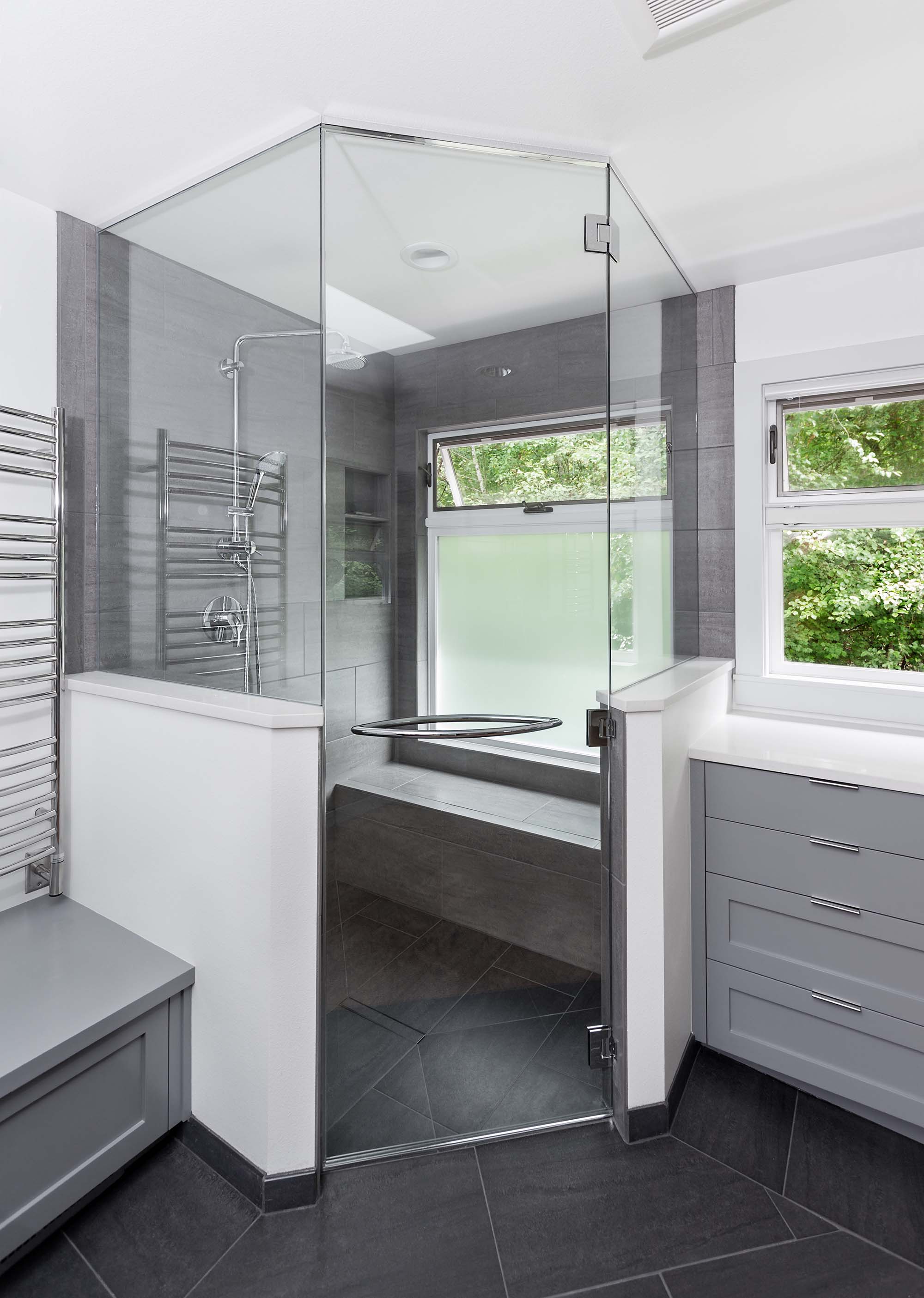
Bathrooms ask a lot from flooring. Wet feet. Splashes from the tub. Steam from hot showers. Makeup spills. Daily cleaning. Add all of that together, and choosing a floor based on looks alone isn’t enough.
You need something that can handle moisture, provide dependable performance, and still complement the rest of your bathroom.
Tile checks all those boxes, but which type should you choose? Porcelain and ceramic are two of the best options for most bathroom floors, while natural stone can provide a distinctive, upscale look when properly selected and maintained.
At Network Interiors, we’ve helped Colorado homeowners and contractors find quality flooring and tile since 2002. Here’s what to consider when choosing bathroom floor tiles for your home.
What type of tile is best for bathroom floors?
For most bathrooms, porcelain and ceramic tile are excellent choices.
Both materials are available in a huge range of colors, sizes, shapes, patterns, and finishes. They’re also easy to coordinate with shower tile, vanities, countertops, and other bathroom finishes.
Porcelain is particularly popular for bathroom flooring because it is dense and has low water absorption. That makes it well suited for spaces where moisture is part of everyday life.
Ceramic is another practical option. Depending on the specific product, it can provide excellent performance for residential bathrooms while offering plenty of design flexibility.
Natural stone is also worth considering if you want something truly unique. Marble, slate, travertine, and other stones have natural variations that give the floor character, although their maintenance requirements differ from manufactured tile.
Why is porcelain tile good for bathrooms?
Porcelain is often near the top of the list when homeowners ask us about bathroom tile flooring.
Why? Moisture resistance is a major reason.
Porcelain tile is made from refined clay and fired at high temperatures, creating a dense material with very low water absorption. This makes it suitable for many moisture-prone environments.
It’s durable, too. Quality porcelain can withstand regular foot traffic and everyday bathroom activity for years when properly installed and maintained.
Then there’s style.
Porcelain can recreate the appearance of marble, natural stone, concrete, and even hardwood. If you love the warmth of wood but don’t want genuine hardwood next to your bathtub or shower, wood-look porcelain can provide a similar visual with tile's practical benefits.
Is ceramic tile a good choice for bathroom flooring?
Absolutely. Ceramic tile has been used successfully in bathrooms for generations.
It offers a broad range of designs and is often more budget-friendly than porcelain or natural stone. Ceramic can be a particularly good fit for powder rooms and residential bathrooms with typical household traffic.
One advantage is the sheer variety available. Want classic white tile? Easy. A colorful pattern? No problem. Something neutral that lets your vanity or shower become the focal point? There are plenty of choices.
However, not every ceramic tile is designed for flooring. Some products are intended only for walls.
Always verify that the bathroom tiles you're considering are rated for floor applications and appropriate for the conditions in the room.
Can natural stone be used for bathroom floors?
Yes, but natural stone requires a little more thought.
Materials such as marble, slate, travertine, and limestone can create beautiful bathroom floors. No two pieces are exactly alike, so the finished space has natural color and pattern variations that manufactured materials can't fully duplicate.
Stone can require more maintenance, though.
Some natural stones are porous and may require sealing to help protect against moisture and staining. Cleaning products also need to be selected carefully because harsh or acidic cleaners can damage certain stones.
If you love natural stone, don't let maintenance automatically rule it out. Instead, understand what the specific material requires before making your decision.
Are small or large tiles better for bathroom floors?
Both can work. The better choice depends on the room and the look you're after.
Large-format bathroom floor tiles create fewer grout lines and can give a bathroom a clean, spacious appearance. They’re popular in contemporary designs and can make even relatively compact spaces feel less visually busy.
Smaller tiles offer different advantages.
Mosaics create more grout lines, which can contribute additional traction depending on the tile and grout used. Their small size also makes them useful for certain shower floors and areas with slopes.
Don't assume a small bathroom automatically requires small tiles. Large-format bathroom tiles can look fantastic in compact rooms when the layout is planned carefully.
How do you choose a slip-resistant bathroom tile?
Bathrooms get wet. That makes traction an important consideration when selecting bathroom flooring.
A glossy tile might look beautiful on a showroom display, but appearance shouldn't be your only consideration for a floor. Look at the manufacturer's specifications and whether the tile is recommended for wet or bathroom floor applications.
Textured and matte finishes can provide more traction than some highly polished surfaces, although performance varies by product.
This becomes particularly important in households with children, older adults, or anyone with mobility concerns.
When comparing tile, tell your flooring specialist exactly where it will be installed. A tile that works beautifully on a bathroom wall isn't necessarily the best choice for the floor.
What color tile works best in a bathroom?
There isn't one right answer.
Light colors such as white, cream, beige, and soft gray can make a bathroom feel bright and open. Darker tile can add drama and contrast, particularly when paired with lighter cabinets or walls.
Natural stone looks to bring warmth and variation. Wood-look tiles can create a relaxed, organic feel. Patterned tile adds personality and can become a focal point.
Consider maintenance, too. Extremely dark or very light solid surfaces may show certain types of dust, water spots, or debris more easily.
The best color is one that works with your vanity, countertop, shower, fixtures, and overall design not just current trends.
How do you maintain bathroom tile flooring?
One reason bathroom tile flooring remains so popular is that routine maintenance can be relatively simple.
Sweep or vacuum regularly to remove loose dirt and debris. Clean the tile using products recommended for the specific material. Pay attention to grout as well, since grout lines may require periodic cleaning.
Natural stone needs special care. Avoid cleaners that aren't approved for the stone, and follow recommended sealing schedules where applicable.
Most importantly, don't assume every type of tile has identical maintenance requirements. Following the manufacturer's care instructions can help preserve your floor.
Where can you find bathroom floor tiles in Western Colorado?
The best bathroom flooring balances appearance with real-world performance. For many homeowners, porcelain offers an excellent combination of durability, moisture resistance, and style. Ceramic provides versatility and value, while natural stone offers one-of-a-kind beauty.
At Network Interiors, homeowners and professional contractors can explore a broad selection of tile, stone, wood, carpet, countertops, and more. Since 2002, we've combined superstore selection and warehouse pricing with a showroom experience designed to make comparing materials easier.
If you're choosing bathroom tiles for a home in Glenwood Springs, New Castle, Carbondale, Gypsum, Eagle, Aspen, Snowmass, Avon, Vail, Basalt, or surrounding areas, visit Network Interiors in Glenwood Springs or Rifle. Our team can help you compare bathroom floor tiles based on moisture performance, traction, maintenance, style, and budget so you can find a floor that works beautifully in your space.


